
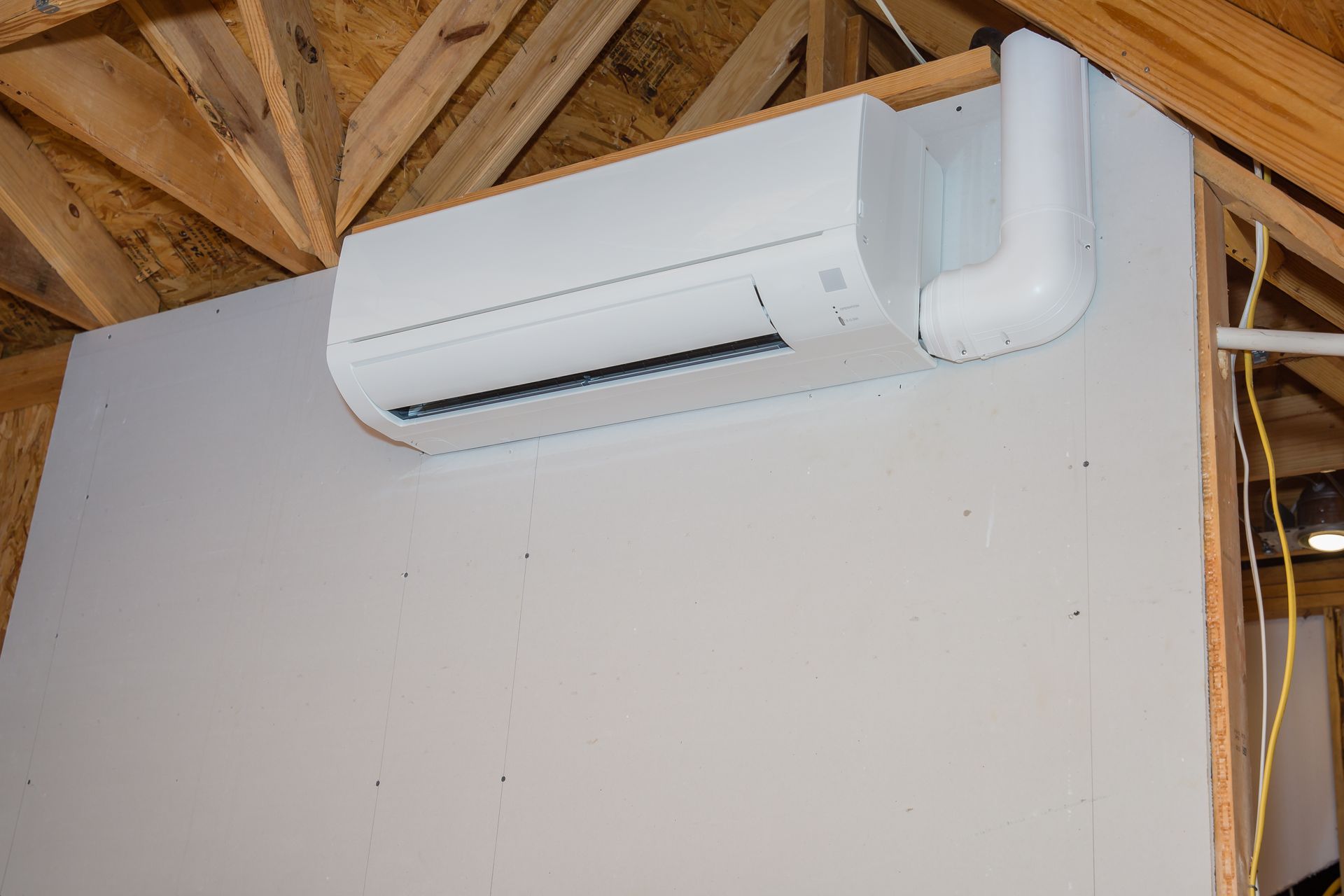
Heating and Cooling Without Ductwork Limits
Ductless Mini-Split Systems in The Lake Norman Area for room additions, garages, workshops, and homes without existing duct infrastructure
North Carolina's humid summers and unpredictable winter cold make climate control essential, but not every space connects easily to central ductwork. Westlake Air, LLC installs and services ductless mini-split systems throughout The Lake Norman Area for homeowners adding conditioned air to finished basements, detached workshops, sunrooms, and older properties where running ducts through walls or ceilings isn't practical. These systems mount directly on walls or ceilings, linking to an outdoor compressor through a small conduit that requires only a three-inch penetration.
A ductless system provides both heating and cooling using inverter-driven heat pump technology, adjusting compressor speed continuously rather than cycling on and off like conventional systems. Single-zone units serve one area with an indoor air handler and outdoor unit, while multi-zone configurations connect up to eight indoor units to a single compressor, allowing independent temperature control in different rooms. Each zone operates on its own thermostat, so you condition only occupied spaces rather than heating or cooling an entire home uniformly.
Schedule a consultation to review ductless system options for your property layout and comfort requirements.
How Ductless Systems Solve Distribution Challenges
Installation involves mounting the indoor unit, securing the outdoor compressor on a pad or brackets, and running refrigerant lines, condensate drainage, and electrical wiring through the wall penetration. Because there's no ductwork to seal or insulate, systems avoid the energy loss that occurs in poorly sealed ducts, which can account for up to thirty percent of heating and cooling waste in conventional forced-air systems. Inverter technology allows the compressor to ramp output up or down gradually, maintaining consistent temperature without the temperature swings and noise associated with traditional on-off cycling.
After installation completes, you notice immediate temperature stability in spaces that previously felt too hot in summer or drafty in winter. Garages converted to home gyms maintain comfortable conditions without the compressor noise typical of window units. Finished attics stay cool during July afternoons without forcing the central system to overcool the rest of the house. Because each zone runs independently, you stop paying to condition guest rooms or workshops when they're not in use, and the whisper-quiet indoor units operate at sound levels around twenty-five decibels during low-speed operation.
Routine maintenance includes cleaning washable filters monthly, checking refrigerant pressures annually, and inspecting condensate drainage to prevent clogs that cause water backup. Repairs typically involve addressing refrigerant leaks at flare connections, replacing failed circuit boards, or clearing blockages in drain lines. Multi-zone systems require balancing refrigerant distribution across zones, so professional servicing ensures each indoor unit receives adequate flow without starving other heads on the same loop.
What Homeowners Ask About Ductless Comfort
Questions about ductless installation and performance come up frequently as homeowners consider alternatives to extending ductwork or relying on portable units.
What size mini-split system does a room addition require?
Sizing depends on square footage, insulation levels, window exposure, and ceiling height, with most bedroom-sized spaces served by nine-thousand to twelve-thousand BTU units while larger open areas may need eighteen-thousand BTU or multi-zone configurations.
How does a multi-zone system differ from installing separate single-zone units?
Multi-zone systems use one outdoor compressor to serve multiple indoor units, reducing exterior equipment footprint and simplifying electrical requirements, though single-zone units offer redundancy since one compressor failure doesn't affect other spaces.
Why do ductless systems run more quietly than window units?
Inverter-driven compressors adjust speed continuously rather than starting and stopping abruptly, and mounting the compressor outdoors eliminates indoor noise from the refrigeration cycle while indoor fans operate at variable speeds down to nearly silent levels.
When should filters be cleaned in a ductless unit?
Filters should be removed and rinsed monthly during heavy-use seasons, particularly in The Lake Norman Area during humid summer months when pollen and airborne dust load increases, ensuring unrestricted airflow and preventing coil fouling.
What happens if refrigerant levels drop in a mini-split?
Low refrigerant reduces heating and cooling capacity, causes ice buildup on indoor coils, and forces the compressor to run longer cycles, requiring a technician to locate the leak, repair it, evacuate moisture from the lines, and recharge the system to manufacturer specifications.
Westlake Air, LLC evaluates your property layout and recommends single-zone or multi-zone configurations based on the spaces you need to condition. Request a system evaluation to determine the most efficient ductless solution for your home.